

-1779693642679.jpg&w=3840&q=75)
Sharbati Wheat Atta Regular - 1 kg
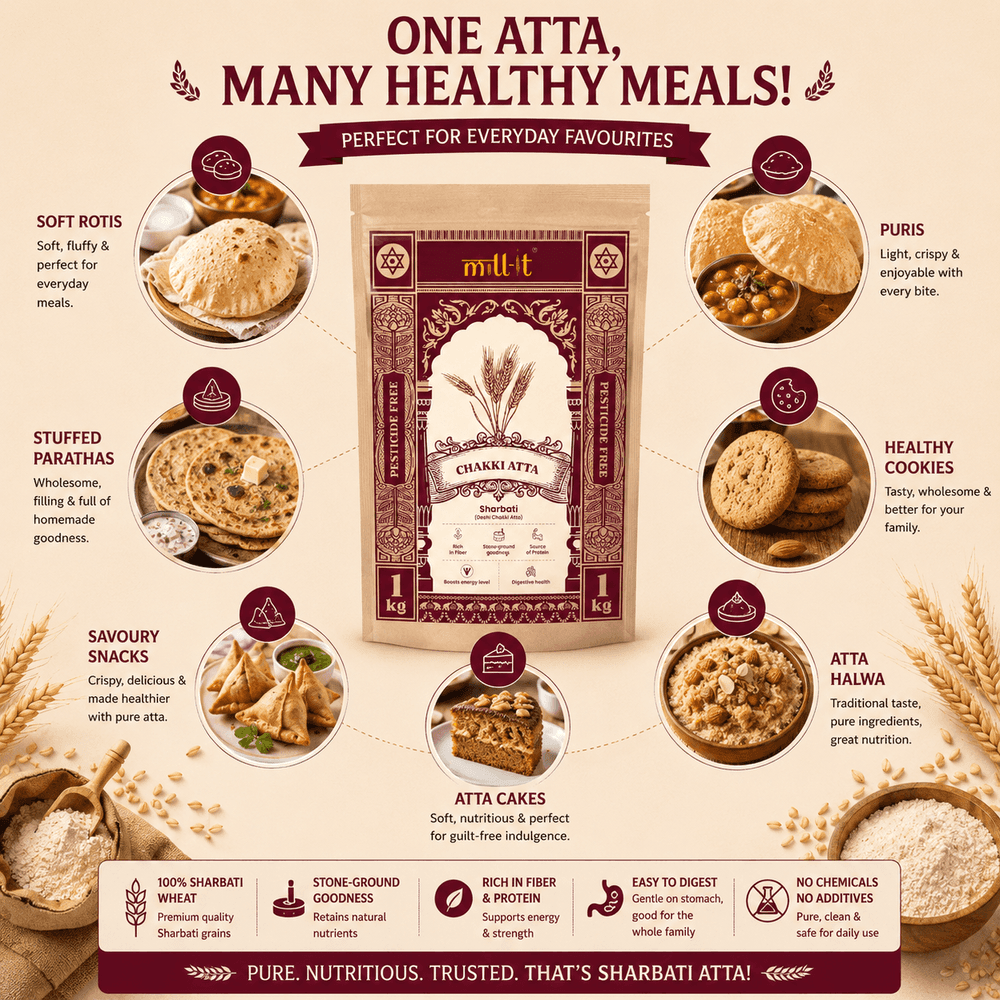
Experience the purity of Mill-it Sharbati whole wheat atta crafted from premium Sharbati wheat sourced from the fertile fields of Madhya Pradesh, known for its naturally sweet taste and superior texture. Gently stone‑ground using a traditional chakki, this 100% whole wheat flour retains the bran, germ, and natural nutrition, giving you soft, fluffy rotis that stay tender for longer. Packed with fibre, complex carbohydrates, and essential minerals, Sharbati atta supports better digestion and sustained energy through the day. It is free from maida, additives, and polishing agents, making it a wholesome choice for everyday chapatis, parathas, puris, and even healthy breads. From weekday meals to festive feasts, this atta brings farm‑fresh goodness and authentic taste straight to your kitchen.
Select Weight
Select Texture
Get an EXTRA ₹100 OFF your first App order
LIMITED TIME ONLY


Frequently Bought Order
Get cooking some delicious delights with MP Superior Atta
Pick from the lot & prepare something your family would love!

Lunch and Dinner
From soft rotis to stuffed parathas, Mill-it Fresh Chakki Sharbati Atta brings freshness, superior taste, and wholesome goodness to every lunch and dinner.
Frequently Asked Questions
Nutritional Information
Product Details
Sharbati Atta: The Golden Grain of MP
Sharbati Whole Wheat flour, prized for its natural sweetness and soft texture is a special variety of wheat grown mainly in Madhya Pradesh. It is nutritionally comparable to khapli whole wheat atta but stands out for its eating quality, regional identity and careful sourcing from specific “golden grain” belts like Sehore and Vidisha.
What is Sharbati Atta?
Sharbati atta is made from Sharbati Wheat, a traditional wheat variety known for its golden, heavy grains, mild sweetness and a naturally soft endosperm that grinds into fine, pliable flour. This variety is especially associated with “MP Sharbati” from central Madhya Pradesh, where the unique combination of black cotton soil and climate creates its characteristic sweetness and softness.
Origins, Geography & GI Tag
Central Indian farmers are known for growing Sharbati wheat. Sharbati wheat can be grown in black, alluvial, fertile soil. Moderate winters and low humidity during grain filling are repeatedly cited as the key to Sharbati wheat’s higher grain weight, density and sweeter taste compared to general wheat from other states.
The grains have a high protein content, are amber, shiny, bold, golden in color, disease-free, and have few yellow berry patches. Sharbati wheat varieties include traditional varieties like Kalawal, Narmada-4, Narmada-112, C-306, and Sujata (HI 617), as well as high-yielding varieties like Amar (HW 2004), Amrita (HI 1500), Harshita (HI 1531), MP 3288, and Pusa Ujala (HI 1605) that are developed by IARI and other Central Indian wheat research stations.
Nutrition Profile & Health Aspects
Sharbati atta is mostly milled and sold in whole wheat form which means the bran, germ and endosperm is retained so its macronutrient profile contains good levels of complex carbs, dietary fibers, and plant proteins and many micronutrtients. Per serving of sharbati wheat contains 23g carbohydrates and 4g fibers. Sharbati atta is fairly rich in magnesium which helps in the secretion of 300 enzymes involved in insulin and glucose pathways, consequenlty helping in blood sugar control making it a safer option for type 2 diabetic patients.
Nutritional Table
| S. No. | Parameter | Values |
|---|---|---|
| 1 | Energy, Kcal/100g | 358.76 |
| 2 | Fat, g/100g | 1.96 |
| 3 | Protein, g/100g | 11.02 |
| 4 | Carbohydrate, g/100g | 74.26 |
| 5 | Sugar, g/100g | 1.99 |
| 7 | Sodium, mg/100g | 3.12 |
Source: Data from an NABL-accredited lab
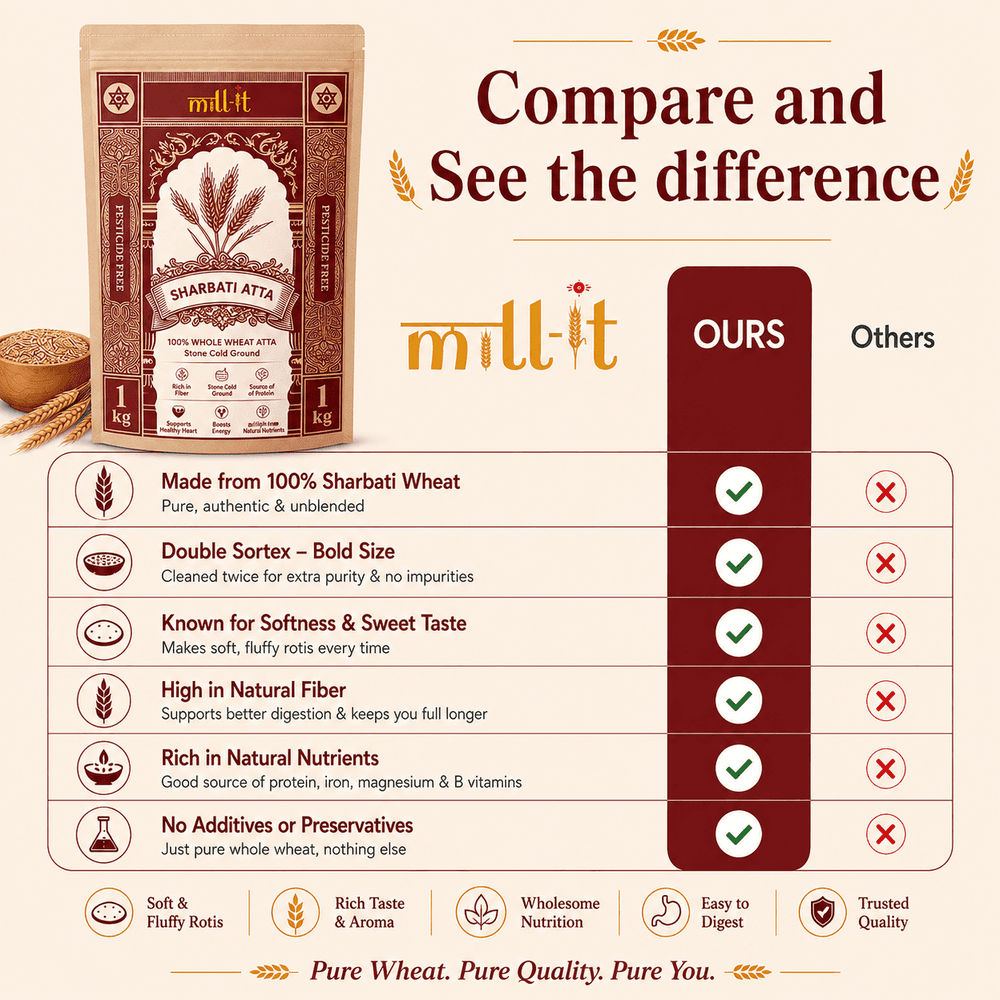
Sharbati vs Regular Whole Wheat Atta
Rather than being a distinct grain type, Sharbati atta is frequently marketed as a "premium" improvement above ordinary whole wheat atta. Here is why:
| Parameters | Sharbati Wheat | Regular Whole Wheat |
|---|---|---|
| Grain Origin | Specific MP belt (Sehore, Vidisha, etc.) | Multiple states, mixed origins |
| Grain Colour & Weight | Golden, heavy kernels, high grain density | Variable, often lighter mix |
| Taste | Mildly sweet, richer wheat flavour | Neutral to slightly bland |
| Texture of Rotis | Very soft, fluffy, stay tender longer | May dry or harden faster |
| Gluten & Dough Handling | Softer gluten matrix, easy to knead, good puffing | Depends on blend; often stronger, sometimes drier feel |
| Nutrition | Whole grain fibre, protein, iron, B vitamins | Similar if truly whole wheat |
| Price Positioning | Premium, branded as single-origin | Mass to mid-premium |
For the majority of consumers, Sharbati's is preferred because of its greater eating quality and consistency—softer, sweeter rotis with a pleasant mouthfeel and longer-lasting softness—than in its drastically different nutrients.
Uses of Sharbati Wheat Atta
Everyday Rotis & Chapatis
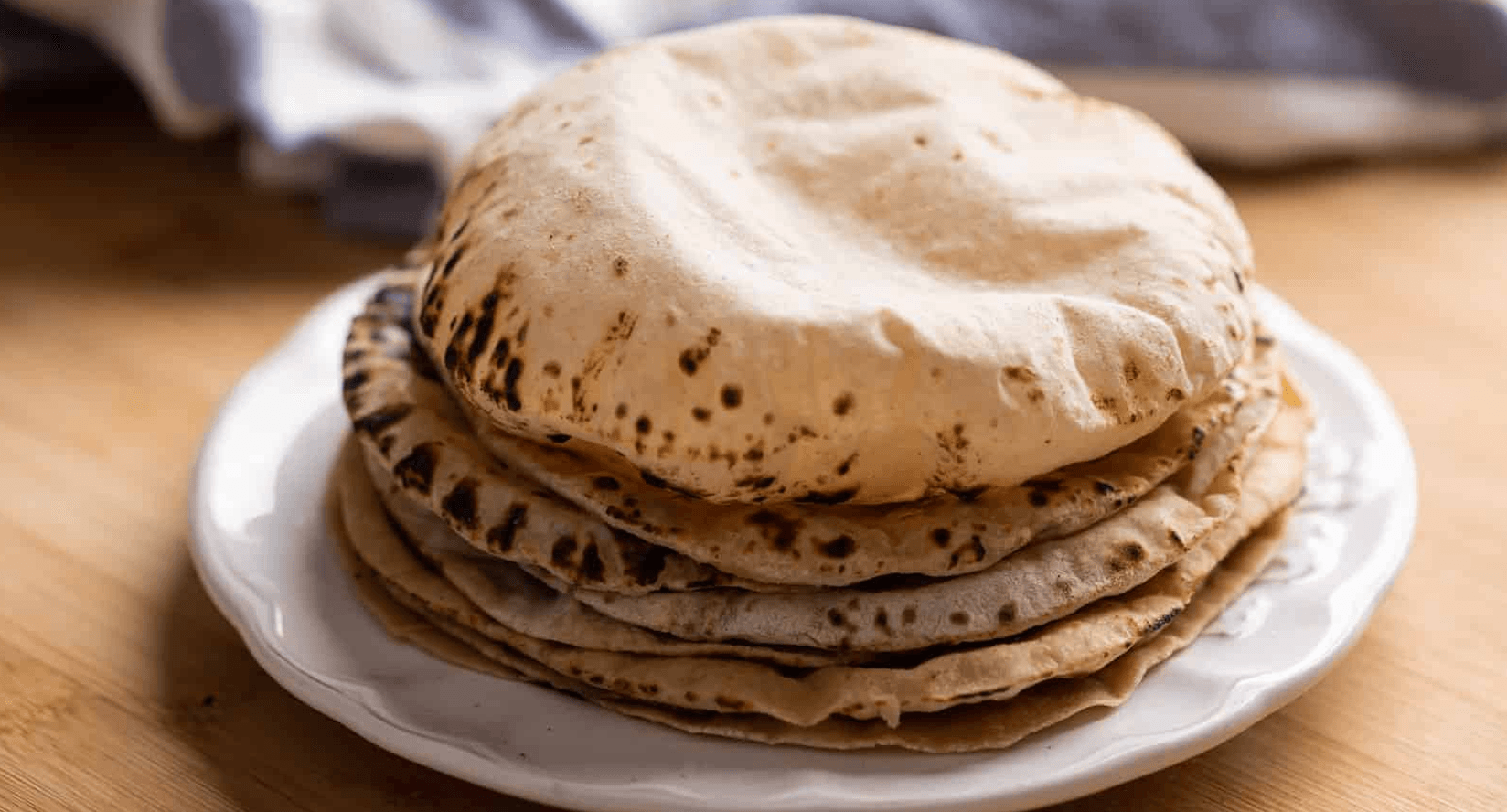
The most famous product of Sharbati atta is its incredibly soft rotis and chapatis, which remain malleable for hours and are perfect for travel and lunchboxes. Rotis have a light, layered structure without turning leathery as they cool because the dough is simpler to roll and puffs out well.
Simple Sharbati Roti Technique
- A pinch of salt, two cups Sharbati atta, and water as needed
- Work into a smooth, soft dough and let it rest for 15 to 20 minutes.
- On a heated tawa, roll into thin discs and fry until puffed and lightly marked on both sides.
Puris, Parathas, and Breads
Sharbati's smooth crumb and subtle natural sweetness make it ideal for festive puris and packed parathas (aloo, paneer, and methi), which turn out to be light rather than rough. Stuffed breads are easier to shape and roll, and the finished product stays soft even after cooling because the atta absorbs water well and produces a pliable dough.
Functional and Multi-Grain Blends
Sharbati atta can serve as the foundation for multi-grain mixes in health-conscious households. It can be combined with modest amounts of fiber-rich flours or millets (bajra, jowar, and ragi) to provide a variety of nutrients without compromising softness and acceptance. When attempting to introduce millets or higher fiber to children or older family members who are texture sensitive, this is extremely helpful.
Storage and Shelf Life
Sharbati atta contains bran and germ, which are natural oils that can turn rancid if improperly stored, much like any other whole wheat flour. Guidelines for general whole-grain storage recommend:
- For up to one to three months, store atta in an airtight container away from heat, light, and moisture—ideally in a cool, dark cabinet.
- Refrigeration or freezing in sealed containers prolongs freshness for several months while maintaining nutrients and flavor.
- Faster rotation and small-batch purchasing are prudent because quality Sharbati, which is frequently stone-ground at lower temperatures to preserve scent, may exhibit flavor changes more quickly than intensively processed atta if stored in warm, humid environments.

