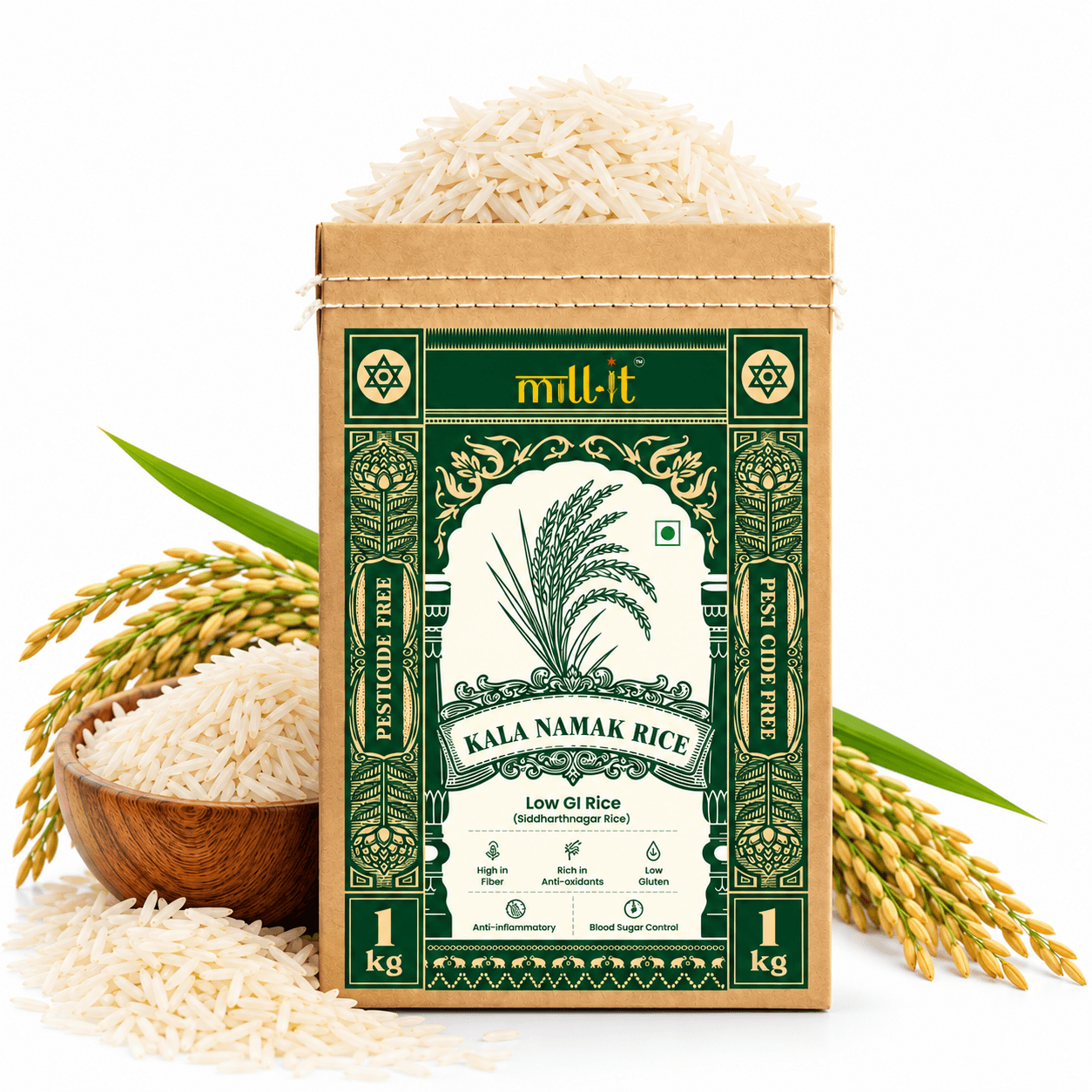
Yes, Kala Namak Rice is known for its naturally distinctive aroma, which is one of its defining traditional characteristics. This fragrance develops during cooking and is often associated with the heritage grain's unique growing region and variety.
Kala Namak Rice differs from other traditional rice varieties in its aroma, grain characteristics, and cultivation heritage, often linked to specific growing regions. Its distinct fragrance and traditional background set it apart from more commonly available rice types.
Yes, Kala Namak Rice can be used for everyday cooking just like other rice varieties, whether for simple steamed rice, pulao, or accompaniments to curries and dals. Its aromatic quality adds a distinct touch to regular meals.
Soaking Kala Namak Rice for 15–20 minutes before cooking is generally recommended, as it can help the grains cook more evenly and enhance texture. However, it can also be cooked without soaking if time is limited.
The water ratio for Kala Namak Rice typically follows standard rice-to-water proportions, though slight adjustments may be needed based on the cooking method used, such as pot cooking versus pressure cooking. Checking packaging instructions provides specific guidance.
Cooking time for Kala Namak Rice is generally similar to other traditional rice varieties, though it can vary slightly depending on whether it's soaked beforehand and the cooking method used, such as stovetop or pressure cooking.
Yes, Kala Namak Rice can be cooked in a pressure cooker, which often reduces cooking time compared to open-pot methods. Adjusting water quantity and cooking duration based on your cooker type helps achieve the desired texture.
Yes, Kala Namak Rice works well for pulao and other rice-based dishes, where its natural aroma adds to the overall flavour of the preparation. It can be used similarly to other aromatic rice varieties in various recipes.
After cooking, Kala Namak Rice typically has a soft, fluffy texture with grains that hold their shape well. The exact texture can vary slightly based on the water ratio and cooking method used.
Kala Namak Rice should be stored in an airtight container in a cool, dry place away from moisture and direct sunlight. Proper storage helps preserve its aroma and quality over time.
Choosing the right pack size depends on your household's rice consumption and storage capacity. Smaller packs suit occasional buyers or those trying it for the first time, while larger packs offer better value for regular use.
When buying Original Kala Namak Rice, check the packaging for sourcing information, best-before date, and confirmation that it's an authentic Kala Namak variety rather than a blended or mislabelled product. This helps ensure you're getting genuine rice.
Mill-it’s Kala Namak Rice offers an authentic, aromatic option for those seeking traditional rice varieties for everyday or special meals. With attention to sourcing and quality, it provides a reliable choice for enjoying original Kala Namak Rice at home.