High Protein Atta
High Protein Atta

-1791658873992.png&w=3840&q=75)


Frequently Asked Questions
High Protein Atta is typically made by blending wheat with protein-rich grains or pulses to naturally increase protein content, whereas protein-enriched flour may use added protein isolates or concentrates. Reading the ingredient list helps you understand the source of protein, whether it's from whole grains or added supplements.
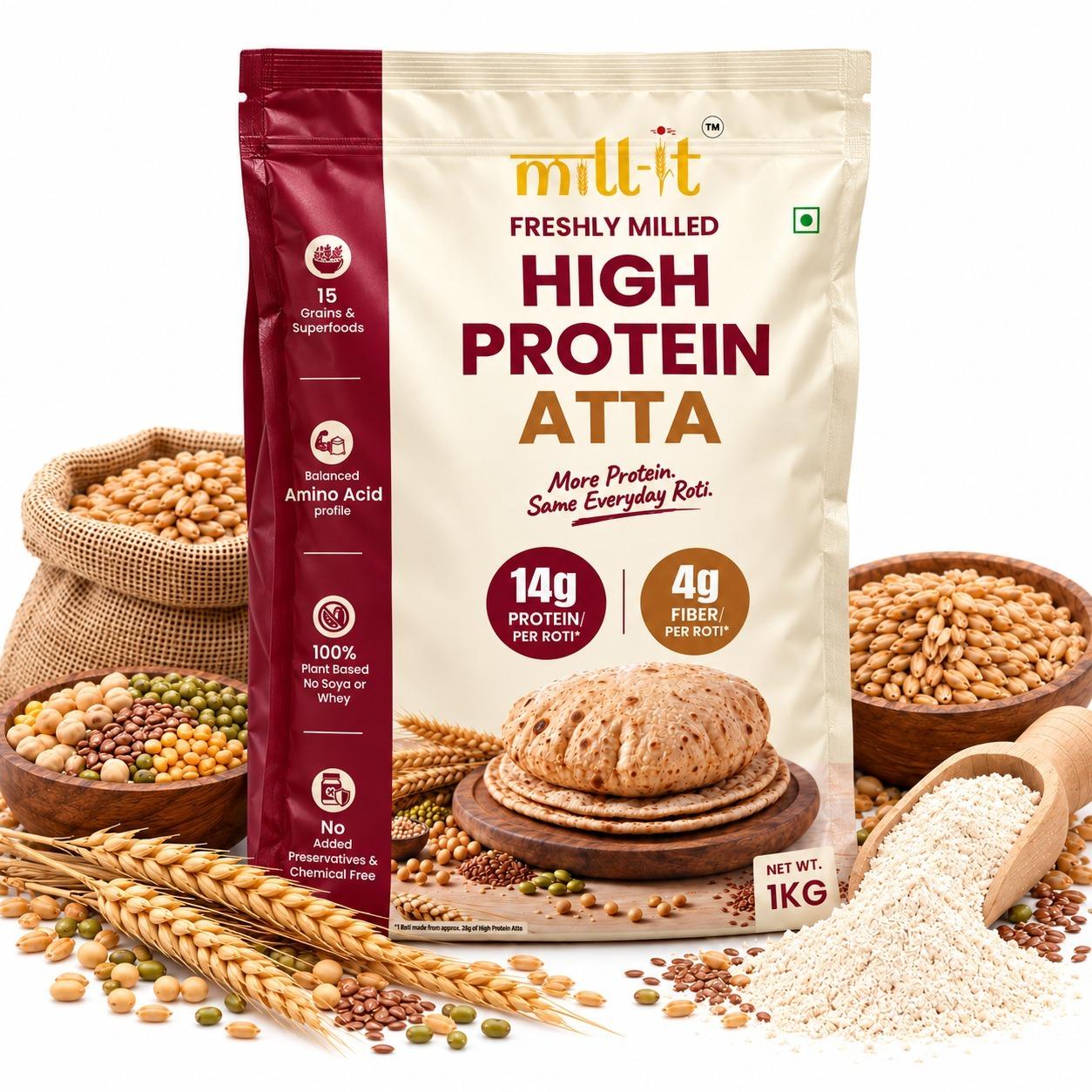
You can check an atta's protein content by referring to the nutrition information panel on the packaging, usually listed as grams of protein per 100g serving. Comparing this figure across different atta products helps you assess which one aligns with your daily protein requirements.
Yes, High Protein Atta often has a slightly coarser or denser texture compared to regular atta, depending on the grains and pulses used in the blend. This can affect how the dough feels while kneading and the final texture of the roti, though it is generally still soft and easy to cook.
High Protein Atta may need a little more water than regular atta since the added grains or pulses can absorb moisture differently. Adding water gradually and letting the dough rest for a few minutes usually helps achieve a smooth, workable consistency for rolling.
Yes, High Protein Atta can be mixed with regular wheat atta to balance taste, texture, and protein intake. This is a common approach for those transitioning to a higher-protein diet, allowing a gradual increase in the proportion of protein atta over time.
Yes, High Protein Atta can be used for parathas and puris in addition to regular rotis. Its slightly denser dough works well for stuffed parathas, though resting the dough before rolling can make the process smoother.
Yes, protein content can vary between different atta products depending on the blend of grains, pulses, or additives used. It's best to compare nutrition labels across brands rather than assume all "high protein" atta products have the same protein percentage.
When checking a High Protein Atta nutrition label, look at the protein content per serving, the list of grains or pulses used, and whether any additives are included. This helps you understand exactly what contributes to the higher protein level in the product.
High Protein Atta should be stored in an airtight container in a cool, dry place away from direct sunlight and moisture. Proper storage helps maintain its freshness and prevents the flour from absorbing odours or attracting pests over time.
Pack size should be chosen based on household size and how frequently the atta is consumed. Smaller packs work well for those trying it for the first time, while larger packs suit regular users who cook rotis daily and want better value.
Yes, High Protein Atta isn't limited to roti-making; it can also be used in parathas, puris, and other flatbread-based recipes. Some people also use it in baked goods, though results may vary depending on the recipe and blend of grains used.
Choosing the right High Protein Atta depends on your protein goals, taste preference, and how the dough performs while cooking. Comparing nutrition labels and trying smaller packs before committing to bulk purchases can help you find the blend that suits your household best.