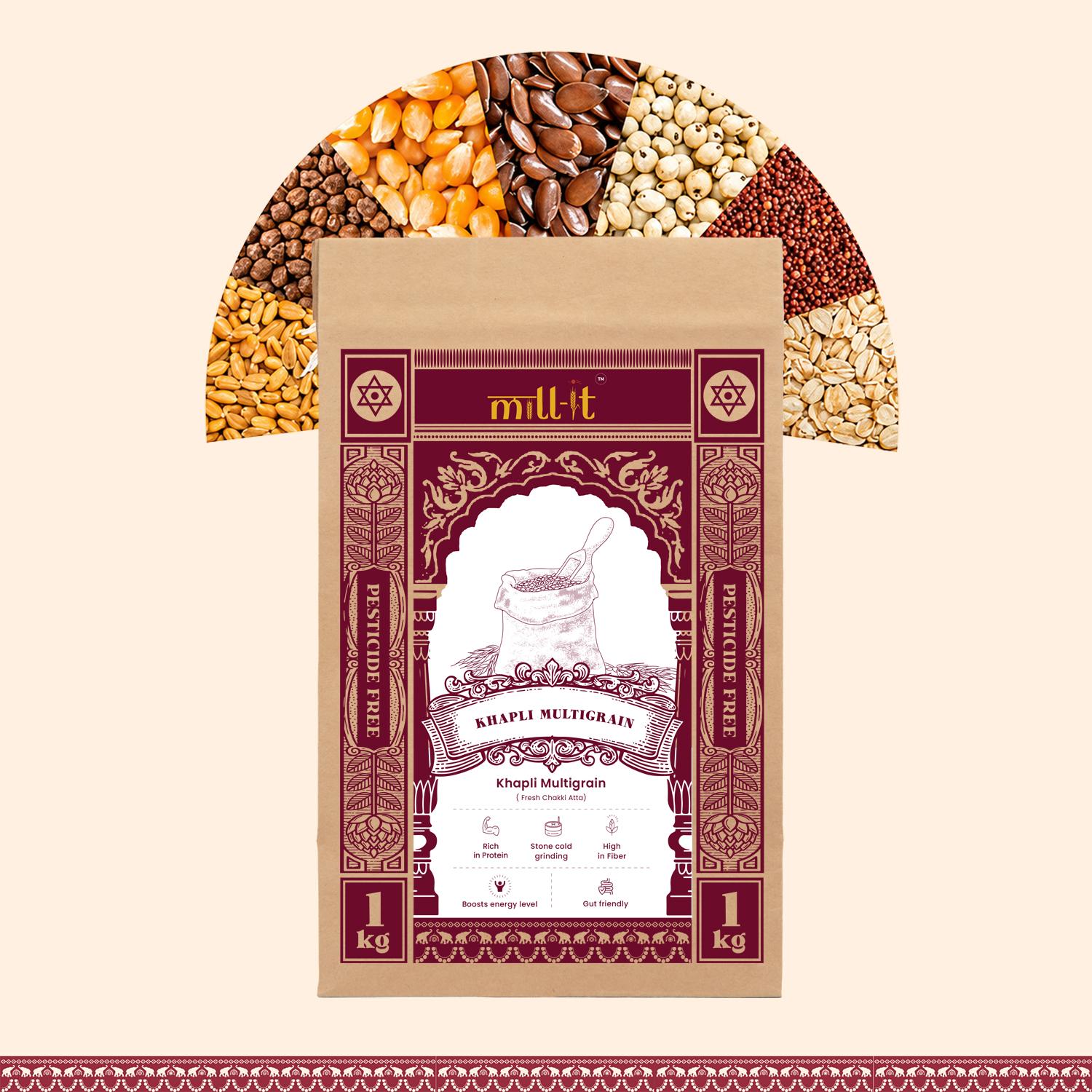
Khapli Multigrain Atta - 5 kg
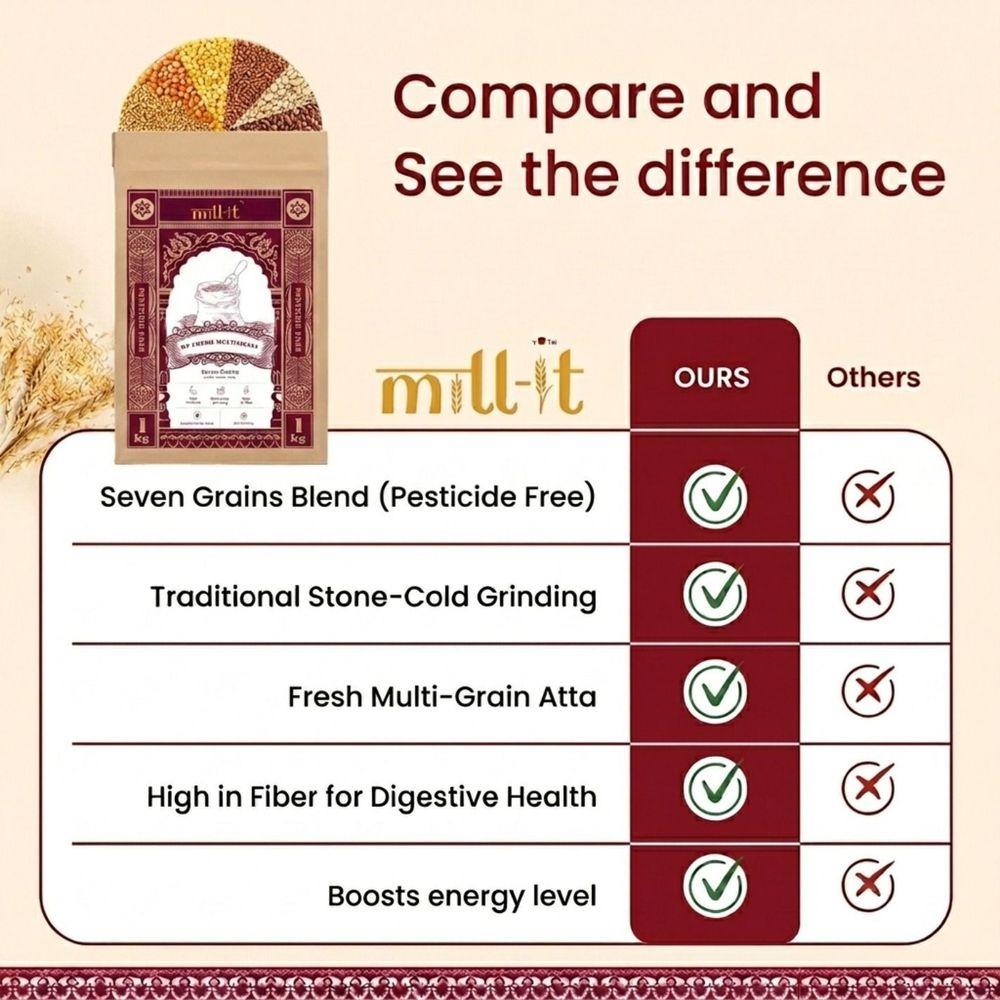
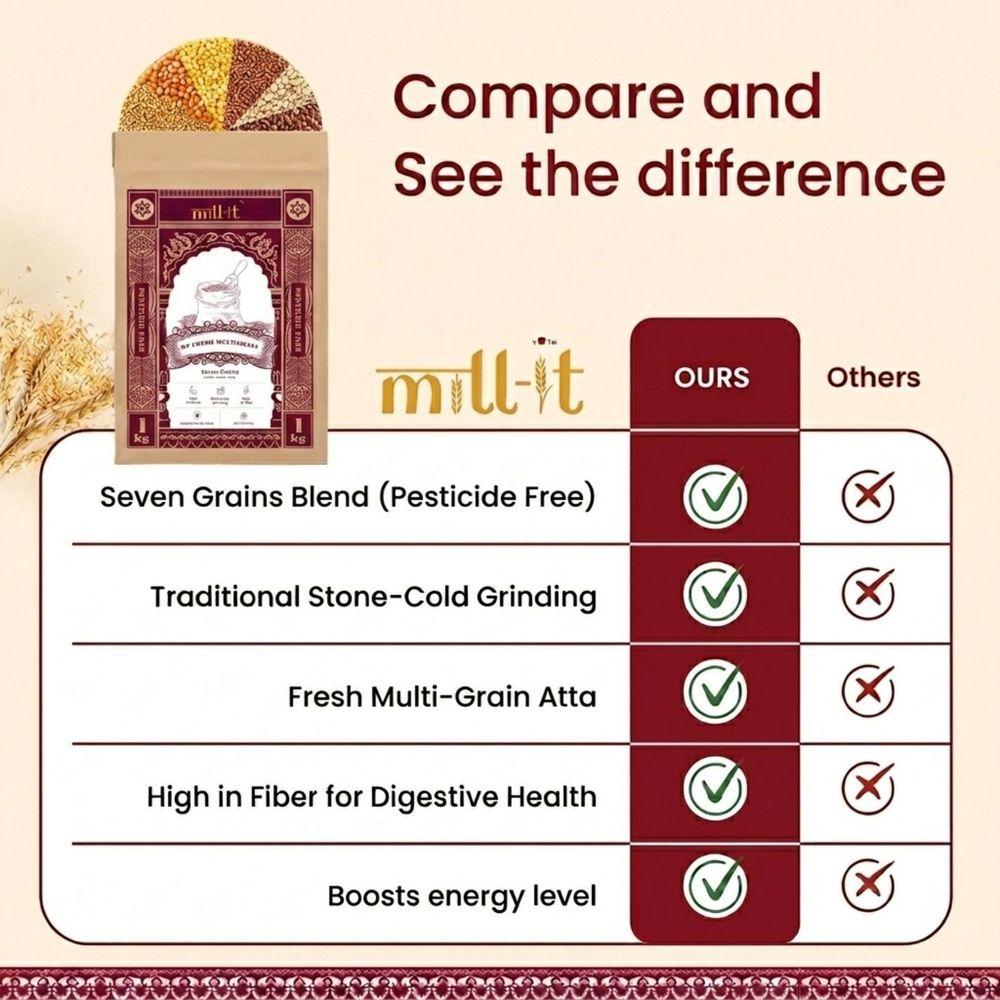
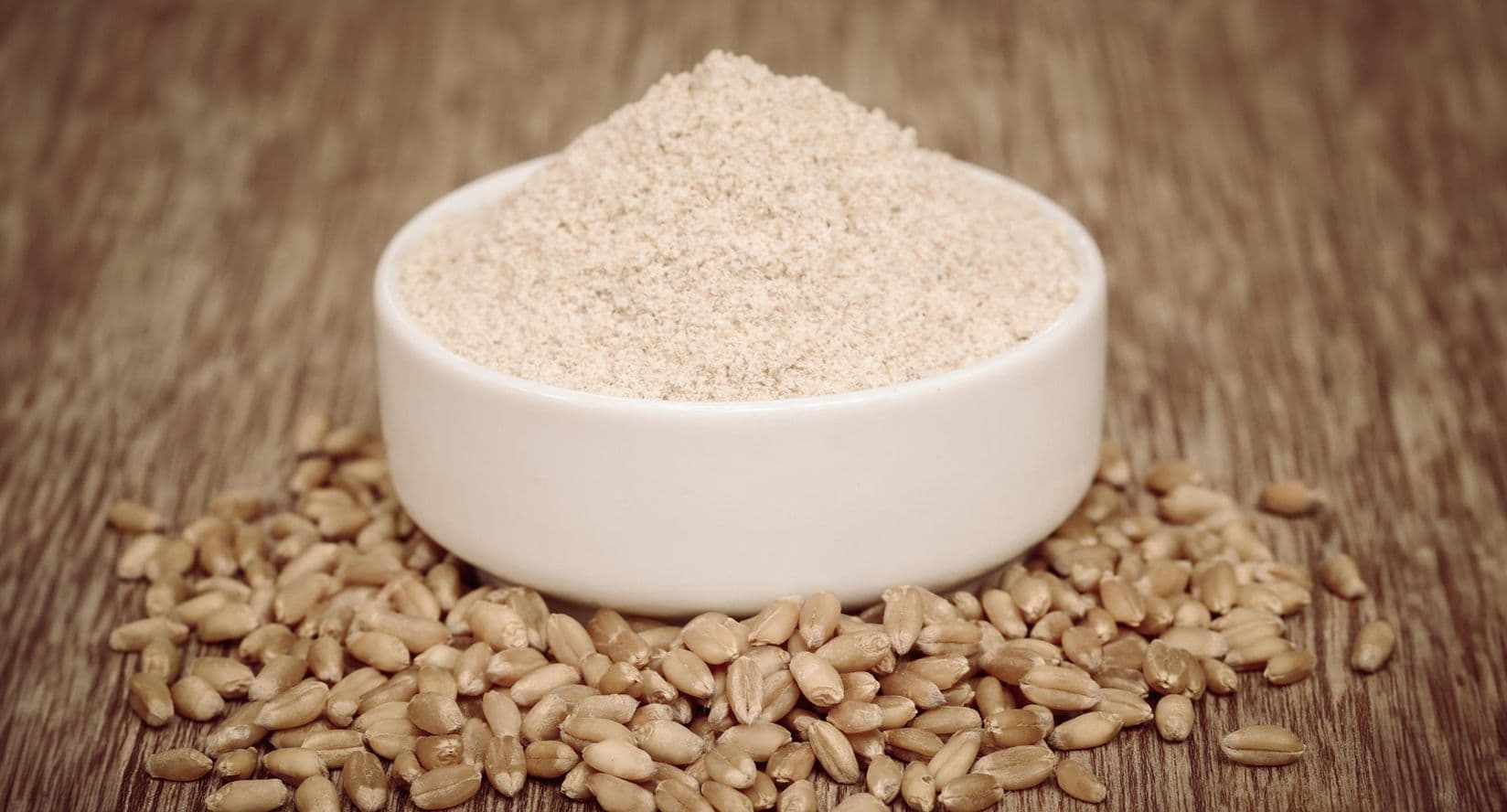
Looking for a flour that’s light on digestion but rich in nutrients? Mill-it’s Khapli Multigrain Atta is a wholesome blend of ancient Khapli wheat, Jowar, Makki, Ragi, Besan, Oats, and Flaxseed, crafted to deliver balanced nutrition in every roti. Khapli brings easy digestibility and low gluten, while millets and flaxseed add fiber, protein, and good fats. Ideal for weight-watchers, diabetics, or anyone seeking clean, earthy nutrition—this atta keeps your gut happy and energy levels stable all day long.
Select Weight


Frequently Bought Order
Frequently Asked Questions
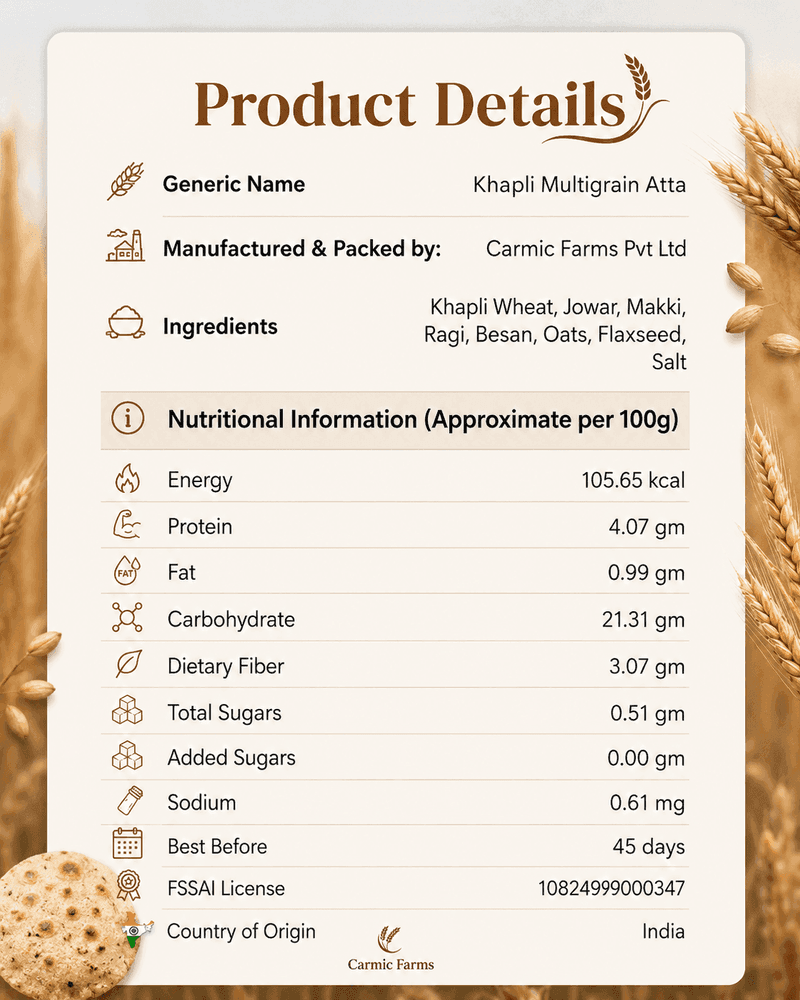
Nutritional Information
Product Details
Khapli Atta: The Traditional Grain Revolutionizing Modern Health
Introduction
In the everyday quest for more healthy and nutrtious alternatives, most of the people from urban India are moving backwards and rediscovring khapli wheat, an ancient treasure. Khapli Wheat scientifically known as Triticum asestivum or Emmer wheat was once a dietary staple, lost in the modern hybridation, and now again finding its roots among health conscious consumers. Khapli wheat priced at nearly five times the price of regualr wheat, signifies not only a staple choice but a conscious shift towards healthier and sustainable nutrition.
What is Khapli Wheat (Emmer Wheat)?
Khapli wheat one of the ancient types of wheat, has roots in the pre-pottery Neolithic era. Khapli wheat's durability and nutritional fullness are demonstrated by the fact that it has not changed much in comparison to contemporary hybridized wheat cultivars. The grain's rough texture and characteristic dark reddish brown color make it necessary to treat the flours using conventional stone-grinding techniques.
Khapli wheat has not been much impacted by hybridization; the grain has larger concentrations of vital nutrients—fiber, minerals, and vitamins—than contemporary wheat cultivars.
Nutritional Profile: Khapli Wheat vs. Other Grains
When compared with modern wheat, bajra(pearl millet), maize, and other cereals the nutritional advantages of khapli wheat become immediately apparent.
| Nutrient Parameter | Khapli Wheat (Emmer) | Bajra (Pearl Millet) | Modern Whole Wheat | Maize (Corn) |
|---|---|---|---|---|
| Fiber Content | Very High (13-14g) | High (11-12g) | High(12-13g) | Moderate |
| Protein (per 100g) | 12-15g | High | ~13g | 8-10g |
| Glycemic Index (GI) | Low (39-55) | Low | Moderate (70-75) | Moderate |
| Key Minerals | Iron, Magnesium, B vitamins | Iron, Calcium, Magnesium | Iron, Magnesium, Zinc, B vitamins | Magnesium |
| Gluten Content | Low, easier to digest | Gluten-free | Contains gluten | Gluten-free |
| Digestibility | Easier despite containing gluten | Excellent | Standard | Good |
Khapli Wheat (Emmer): The Nutritional Powerhouse
Khapli wheat stands out as one of the most nutritious wheat varieties available today. The nutritional profile of khapli wheat makes it an exceptional choice for everyday meals.
Exceptional Fiber content: Khapli wheat contains nearly 50% more fiber than conventional wheat. This high fiber content translates into significant daily benefits: improved digestion, more stable energy levels throughout the day, and a prolonged feeling of satiety.
Lower Glycemic Index: This is where it truly excels, where the modern wheat varieties is very high in glycemic index and relatively less fiber content, emmer wheat, with its high fiber content and low GI, helps in diabetes management and weight control. The low GI means the blood glucose levels rise gradually rather than spiking, preventing the insulin surges that lead to energy crashes and cravings.
Rich mineral profile: Iron, magnesium, zinc ,and B vitamins (particularly niacin/B3) support immune function, oxygen transport, and bone health. For women especially, iron content addresses a critical nutritional gap.
Easier digestion: While khapli contains gluten, its simpler protein structure makes it significantly easier to digest than modern wheat. Many individuals with bloating and celiac issues find khapli wheat more tolerable.
Antioxidant-rich: Khapli wheat contains polyphenols and many other antioxidants that combat oxidative stress and inflammation. which helps in preventing diseases.
Bajra (Pearl Millet): The Gluten-Free Winter Ally
Bajra complements khapli in a diversified grain portfolio. Its natural warming properties make it ideal for winter consumption, and its gluten-free status serves consumers with severe celiac diseases and gut issues. Iron and calcium content is quiet competitiv,e although khapli edgs slightly in overall nutrient density.
Modern Whole Wheat: The compromise
While modern whole wheat flour is better than khapli wheat, it falls short of khapli in critical areas like its high glycemic content (70-75) and high gluten content makes it less suitable for blood sugar management and digestive health issues. The extensive hybridization has inadvertently reduced the nutrient concentration even in whole grain form.
Maize(Corn): The Gluten-Free Option with Limitations
Maize is rich in magnesium which helps in heart health anf serves as a gluten free alternative but it lacks fiber density and comprehensive nutrtient profile of superior ancient grains like khapli and bajra.
Why Khapli Atta is Superior: Six Transformative Health Benefits
1. Control of Blood Sugar and Diabetes The most advantageous feature of khapli for the expanding population managing diabetes and metabolic syndrome is its low glycemic index (39–55). Low GI foods prevent insulin resistance by causing blood glucose levels to rise gradually rather than sharply. Khapli atta can be a game-changing intervention without disrupting diet for people following diabetes management protocols.
2. Better Gut Support & Digestive Health The high soluble and insoluble fiber content of khapli wheat changes how the digestive system works. While insoluble fiber encourages regular bowel movements and avoids constipation, soluble fiber controls blood sugar and lowers cholesterol. As a prebiotic, the fiber supports healthy gut flora that are vital for immunity, metabolism, and even mental health.
3. Effective Weight Management The combination of high fiber, high protein, and low glycemic index creates an optimal formula for weight control. The fiber promotes satiety—keeping you full longer—while the low GI prevents blood sugar crashes that trigger cravings and overeating. Studies show that individuals consuming high-fiber, low-GI grains naturally consume fewer calories without deliberate restriction.
4. Heart Health & Cholesterol Management Khapli's fiber content actively lowers LDL cholesterol, a primary risk factor for cardiovascular disease. The magnesium supports healthy blood pressure regulation, while antioxidants reduce inflammation—the root cause of atherosclerosis. Regular consumption of khapli atta contributes measurably to reduced cardiovascular disease risk.
5. Nutrient Density & Micronutrient Adequacy The niacin (vitamin B3) content supports energy conversion, skin health, and nervous system function. Iron addresses deficiency-related fatigue and impaired cognition. Magnesium combats cramps, supports sleep, and regulates stress hormones. These aren't trace amounts—khapli's mineral profile rivals or exceeds supplementation in some cases.
6. Antioxidant Protection Against Chronic Disease Khapli wheat's polyphenol content provides cellular protection against oxidative stress and inflammation linked to cancer, Alzheimer's, and metabolic disease. This is preventive nutrition at its most fundamental.
Why Premium Price?
1. Lower Yields: Compared to modern wheat, which yields 50–60 quintals per hectare, Khapli wheat yields about 45 quintals. This natural limitation drives its scarcity value.
2. Labor-Intensive Processing: Compared to industrial roller mills, traditional stone-grinding (chakki) techniques take longer and require skilled labor, but they preserve nutrients. This processing cost is essential to maintain quality.
3. Limited Cultivation: There are supply constraints because Khapli is only grown in a few regions, mainly Maharashtra, Karnataka, and parts of Gujarat.
4. Certification & Traceability: High-quality Khapli producers invest in lab testing, farmer partnerships, and quality assurance, which contributes to higher pricing.
5. Market Positioning: Premium positioning creates a self-reinforcing market dynamic, attracting urban consumers willing to pay for health benefits.
Market Expansion and Demand Increase
Despite premium pricing that is three to five times higher than that of regular wheat flour, the market for khapli atta is growing at a rate that is almost five times faster than that of the entire atta category. Khapli atta is growing rapidly, while regular atta grows at an annual rate of 8–9% and high-protein variations at 15–18%
Conclusion: The Reasons Khapli Atta Should Be in Your Kitchen
Khapli atta is much more than just a high-end substitute for flour. It represents the understanding that, long before science confirmed their knowledge, our ancestors had an intuitive understanding of nutrition. Khapli wheat, an ancient grain that flourished for millennia prior to industrialization, overcame marginalization to become precisely what contemporary consumers need: a functional food that actually improves health metrics without necessitating dietary compromise or supplementation.
Genuine scarcity, labor-intensive processing, and transparent sourcing are reflected in the premium pricing, not marketing gibberish. Khapli atta is an investment in long-term health ROI, not a luxury, for people with diabetes, seeking better digestive health, or just not willing to sacrifice nutritional integrity. ```